How to Get Cited in Claude AI?
 Naqui Shaikh
CLAUDE AI CITATIONS · PIERVIEW.AI
Ask most marketers which AI platform sends them traffic, and they will name two: ChatGPT and maybe Perplexity. That answer was accurate a year ago. It is wrong today.
In March 2026, Claude quietly overtook Perplexity in monthly referral sessions for the first time and has stayed ahead ever since.
On B2B brand sites, Claude now accounts for 20.5% of all AI referral traffic - up from 1.4% eight months earlier - making it the number two AI engine for business audiences.
The growth curve is unlike anything we’ve seen in the AI search landscape: referral traffic from Claude surged 386% between January and July 2026 alone.
Yet most companies cannot see Claude in any dashboard they own. Let us share an approach that would make this 100x easier:
Table of Contents
- The Numbers That Matter
- Why Claude Is Different from Other AI Engines
- The Brave Search Connection
- How Claude Cites Content?
- 1. Search-Pattern Models (e.g., ChatGPT, Gemini)
- 2. Content-Selection Models (e.g., Claude, Perplexity)
- The Claude SEO Playbook
- 1. Crawler Access - The Most Overlooked Step
- 2. URL Submission to Brave
- 3. Content Structure for Citation
- 4. Tracking Claude Citations
- Bottom Line
- Sources
The Numbers That Matter
Three datasets that tell the same story.
- We at Pierview analyzed 8.7 million LLM-driven sessions across 125 websites over 8 months. ChatGPT commands 75% of standalone AI referral traffic, but Claude grew ~355× from 24 sessions in Jan 2025 to 8,528 in July 2026, overtaking Perplexity in March.
The market context matters too. Perplexity has fallen 58% from its March 2025 peak. Copilot collapsed 96%. Gemini grew steadily at 2.9× but lacks Claude's acceleration. At the same time, 80% of organizations now rely on Anthropic (up from 46% a year ago, per Ramp), and Claude's mobile DAUs hit 11.3 million in early March - a 183% increase since January 1.
Why Claude Is Different from Other AI Engines
Claude is not primarily a search engine. It is a work tool that can search. This distinction changes what "optimizing for Claude" actually means.
ChatGPT has leaned into search and general-purpose assistance. Perplexity built its identity around AI-powered web search. Claude, meanwhile, is being shaped around work: writing, coding, analysis, automation, and repeatable workflows.
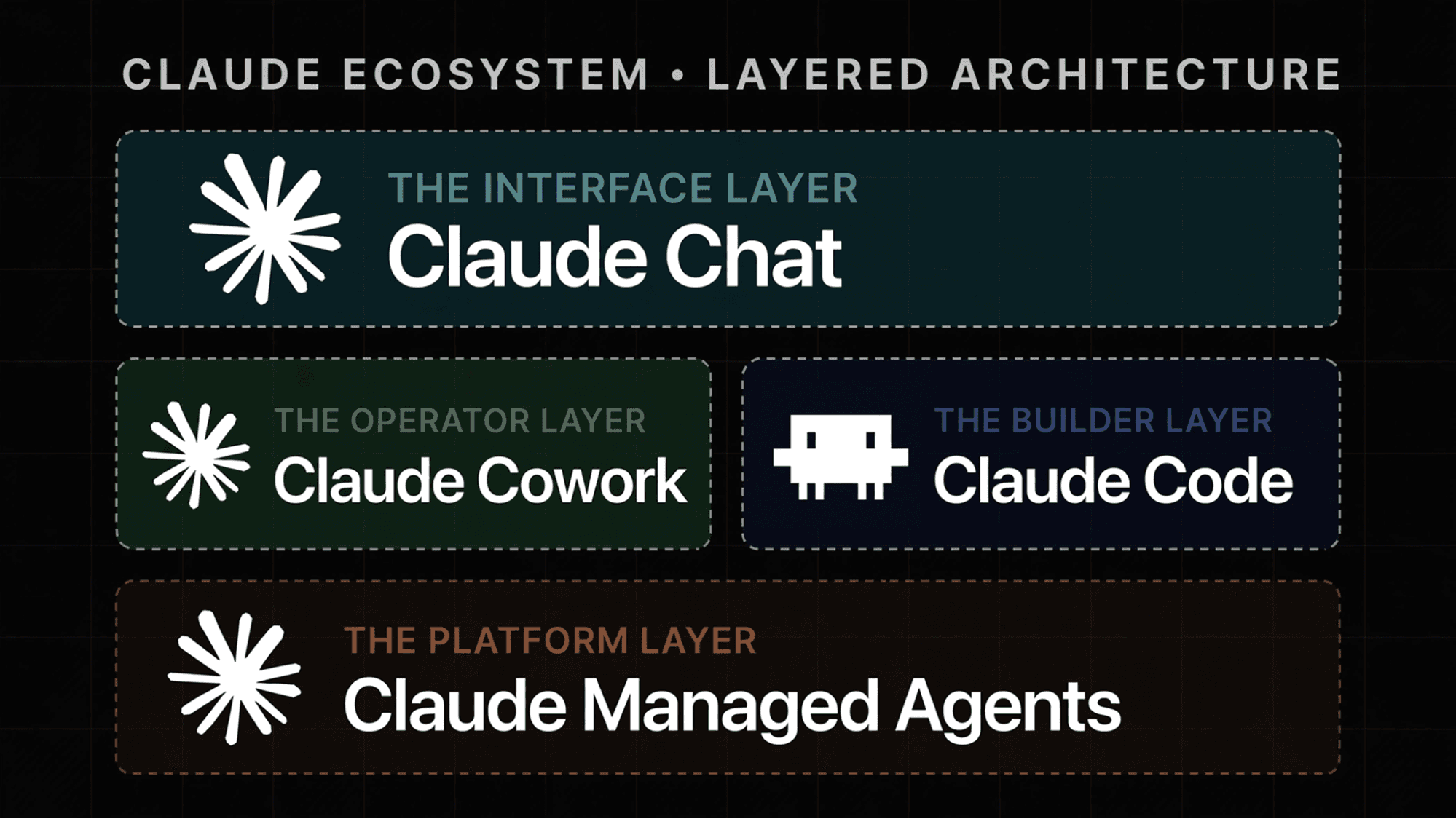
Products like Claude Code, Claude Cowork, Claude Chat and Manged agents with 300+ data connectors via the Model Context Protocol (MCP) make Claude less a chatbot and more a workspace.
When a user opens Claude, they are usually not looking for a list of links. They want to draft a brief, analyze a dataset, build a report, or automate a task.
Claude searches the web only when a request requires current, changing, or external information - and even then, it may answer from training data without invoking web search at all.
This inconsistency is what makes Claude the hardest engine to influence and the easiest to leave out of a report.
The Brave Search Connection
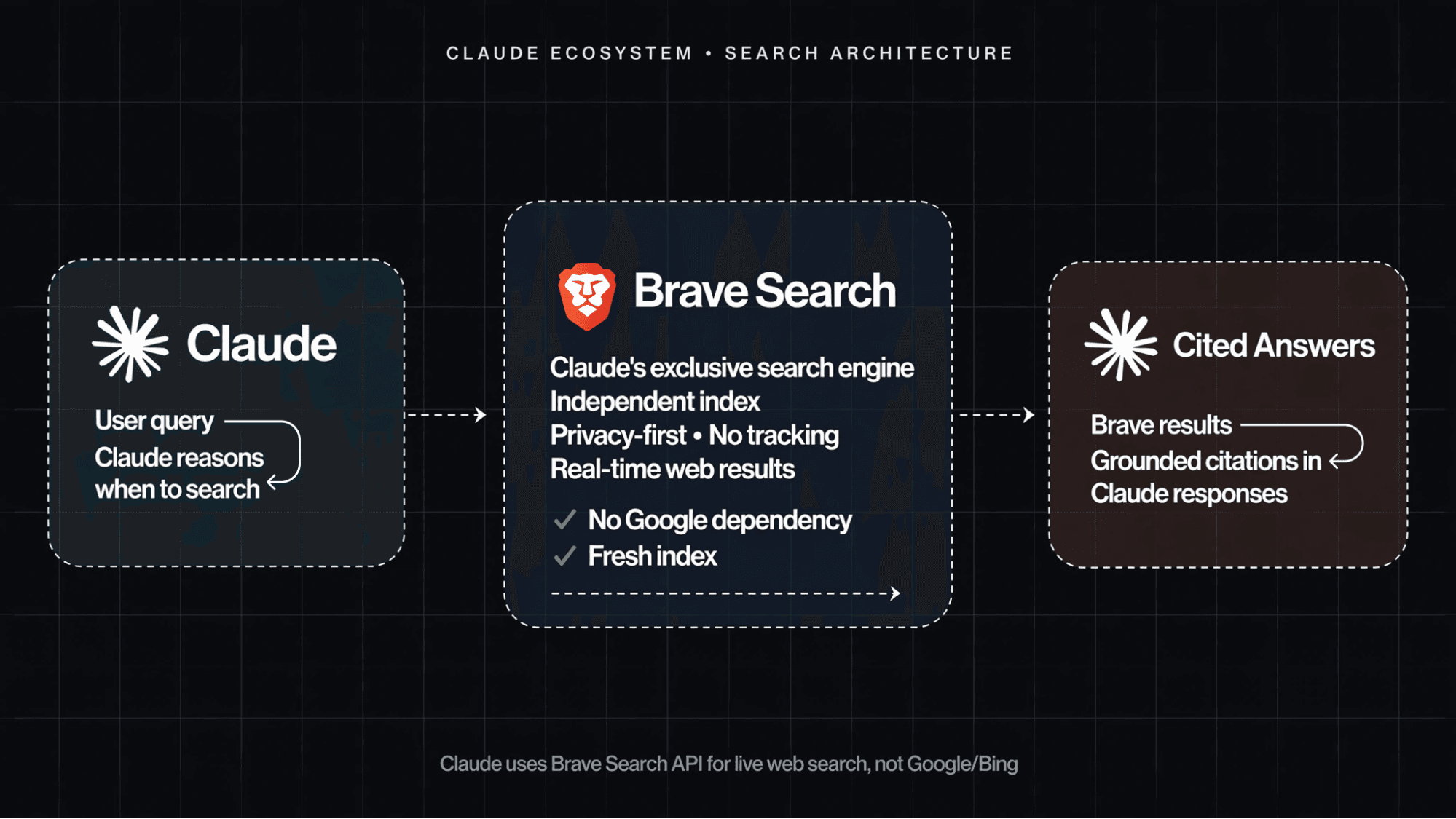
When Claude does search the web, which engine does it query? The evidence points clearly to Brave Search.
- Trust Center disclosure: On March 19, 2025, Anthropic added "Brave Search" to its subprocessor list - a legal disclosure linking Brave directly to Claude's web search feature.
- Code evidence: Developer Simon Willison found an internal parameter named BraveSearchParams inside Claude's tool definition within 24 hours of Anthropic's web search launch.
· Claude Cowork on Bedrock: On June 30, 2026, Anthropic launched Claude Cowork on Amazon Bedrock with explicit Brave Search integration for real-time web intelligence — the first joint product announcement.
Important caveats: Anthropic has never issued a joint press release confirming Brave as the sole backend.
Image search in Claude is powered by Bing, not Brave.
Claude also applies "dynamic filtering" that re-ranks search results before answering.
Tech vendor relationships rotate, so betting on one index is risky. The practical takeaway: be in Google, Bing, and Brave - diversify.
How Claude Cites Content?
The Previsible report identified two distinct platform personalities in AI search:
1. Search-Pattern Models (e.g., ChatGPT, Gemini)
- Trust in Domains: Broadly trust established domains but struggle with pinpointing specific pages.
- Referral Traffic: ChatGPT sends 28.8% of its referral traffic to internal search result pages.
- Limitation: Recognizes the brand or domain as relevant but may not always select the most accurate or precise page.
2. Content-Selection Models (e.g., Claude, Perplexity)
- Page-Level Precision: Focus on selecting specific, relevant pages rather than relying on domain authority alone.
- Content Preferences:
- Strong bias toward educational content (e.g., guides, courses, research-oriented pages, long-form articles).
- Claude users engage more with longer-form content compared to referrals from other AI platforms.
- Optimization Rewards:
- Depth and specificity are prioritized.
- A well-researched, 2,000-word guide with:
- Primary sources
- Structured headings
- Current data
- Has a higher likelihood of being cited.
The Claude SEO Playbook
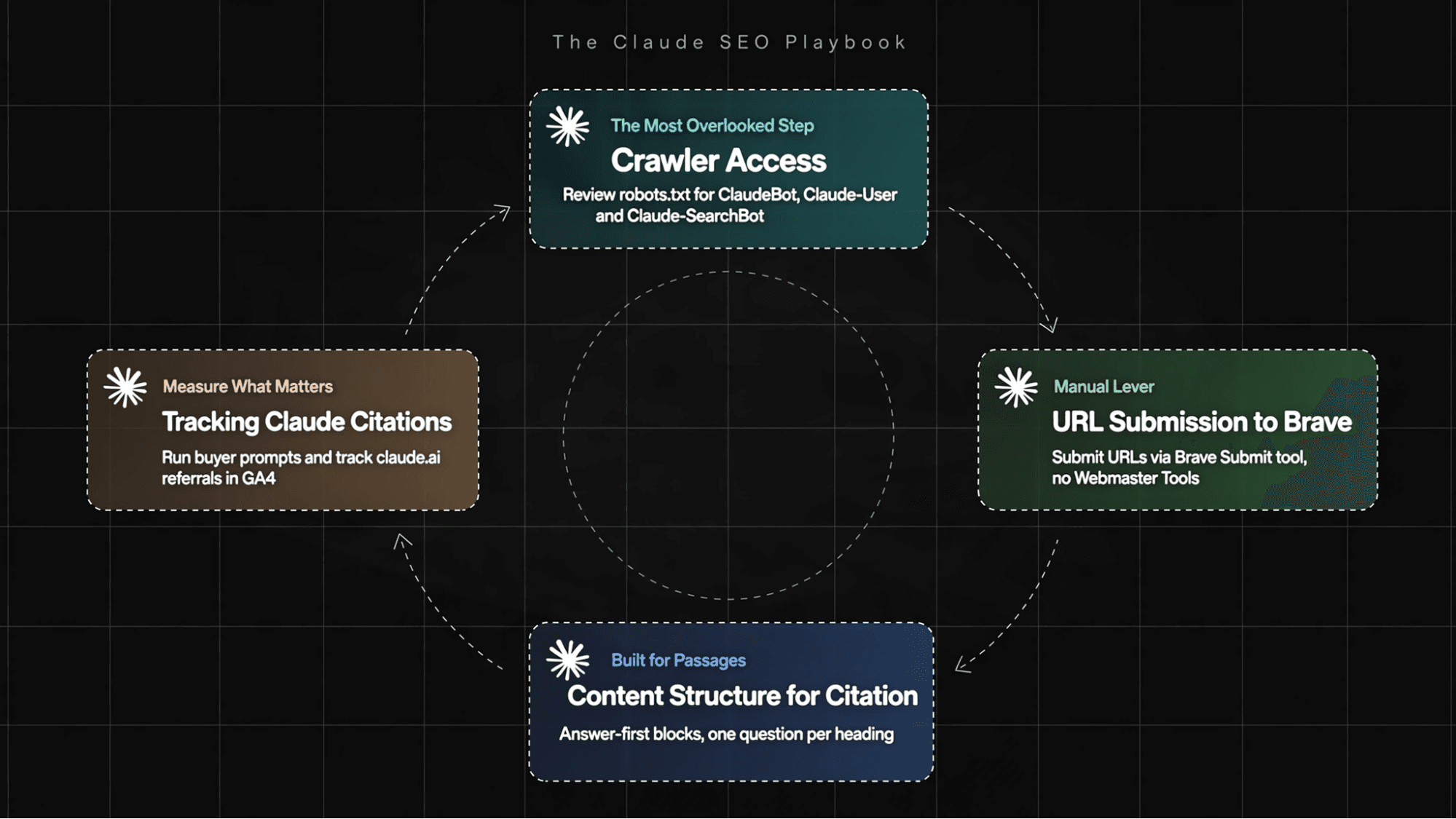
1. Crawler Access - The Most Overlooked Step
Anthropic operates three separate crawler bots, each with a different role:
- ClaudeBot: Collects data for model training. Blocking this affects training data inclusion.
- Claude-User: Handles user-directed retrieval when someone uploads a document or asks Claude to read a URL.
- Claude-SearchBot: Powers web search citations. Anthropic states that blocking this "may reduce a site's visibility and accuracy in user search results."
Review your robots.txt explicitly. Many companies block all AI crawlers as a default and then wonder why their content never appears in AI-assisted discovery. This should be a strategic decision, not an accident.
2. URL Submission to Brave
Brave has:
- No Webmaster Tools
- No sitemap upload
- No ranking report
Its only manual lever is the Brave Submit URL tool at search.brave.com/submit-url. Submit each important URL one at a time:
- Homepage
- Service pages
- Top case studies
- Contact page
Note: Bravebot operates on a reciprocal rule: if you block Googlebot in robots.txt, Brave will not crawl you either. Brave indexing is slower than Google by about 30–60 days, so patience matters.
3. Content Structure for Citation
Claude citations are built from passages, not entire pages. Structure each content block to be self-contained and extractable:
- Answer-first: Lead with the direct answer in the first 40–60 words of each section, before any preamble.
- One question per heading: Every H2 or H3 should answer exactly one clear question, and the paragraph beneath it should stand alone.
- Primary sources + fresh data: Claude values verifiability. Cite your sources, show publish and update dates, and replace outdated claims.
- Schema markup: Use Article, FAQPage, Person (for author E-E-A-T), and BreadcrumbList schema. Not required but reduces ambiguity.
- Topic clusters: One strong page can earn a citation. A cluster of connected, authoritative pages earns trust.
4. Tracking Claude Citations
Claude is harder to track than other engines because it does not always show sources. A practical monthly workflow:
- Run 25–50 prompts your buyers actually ask.
- Record cited domains.
- Compare against competitors.
- Refresh pages that are close but not cited.
- Re-test after re-crawling.
In GA4, filter for claude.ai as a referral source-it is the one Claude number you can see without a third-party tool. Look for it separately from chatgpt.com.
Bottom Line
Claude isn’t yet a major traffic source like ChatGPT or Google, but it’s the fastest-growing AI platform for business audiences and the hardest to measure. Most brands focus on a single-engine strategy while missing this opportunity.
The playbook is simple: allow Claude’s crawlers, submit URLs to Brave, structure content for extractability, build authority, and track citations monthly. Early adopters, especially in tech, development, and professional services, gain an edge as Claude citations compound uniquely.
For a predictable way to rank in Claude, try Pierview.ai for free today.
See exactly how often Claude cites your brand, and what to fix so it cites you more. Pierview tracks your citations across major AI models including ChatGPT, Perplexity, Claude, DeepSeek, Grok, and Gemini, with ongoing support as new models emerge.
Get Started → · Book a Demo with Pierview →
No commitment. See your Claude citation data in the first session.
Sources
Previsible. "2026 State of AI Discovery Report." July 6, 2026.
SE Ranking. "What Claude's Automation Boom Means for AI Visibility." June 19, 2026.
OrganiKPI. "Claude Is the #2 AI Engine Nobody Optimizes For." July 14, 2026.
Most AI Labs. "How Claude Finds Your Business (and Why Brave Search Matters)." May 15, 2026.
Anthropic. Trust Center — Subprocessor List.
Futurum Group. "Claude Cowork on Amazon Bedrock and Brave Search." June 30, 2026.
Pipeline Velocity. "Claude SEO: How To Get Your Site Cited In Claude Answers." June 16, 2026.